For those of you who aren't familiar with my author blog, I've maintained it for almost a year now with multiple articles each month on subjects including the craft of writing, bonus content for my stories, and even a few game storyline reviews.
If you’re not already following it, now’s the perfect time, as I will be giving a free copy of one of my books to one lucky follower if we manage to reach 50 or more total followers by the 6th of April.
To enter the drawing, click the Follow button in the right-hand column. You will need a Google+ account to follow my blog, but it’s free and easy to set up if you don’t already have one.
Remember that we need at least 50 followers by the 6th of April for the drawing to happen, so be sure to spread the word!
Monday, March 9, 2015

Friday, March 6, 2015
What Makes a Classic Novel Popular?

Of course, I’m not saying that assigning classic literature in schools is a bad thing. In many cases, it’s the first exposure students have to the kind of writing that challenges them to really think and consider what they've read rather than simply seeking to be entertained. But what makes a certain type of classic novel popular? Why are characters like Tarzan, Dracula, and Frodo Baggins still a significant part of our culture decades after they were created?
The simplest answer is that most people have been exposed to these characters outside of their original works. Movies, TV shows, and even video games and graphic novels have turned classic characters into brand names, something familiar that the average consumer feels like he knows and is therefore more willing to spend money on. These days, it’s likely that most consumers are first exposed to classic works of fiction through some medium other than their original work.
However, I believe there’s more to a popular classic’s appeal than its level of exposure. I think it’s safe to say that every classic novel has been adapted to some other medium at one time or another, but that doesn't make them popular, just recognizable. This is why I believe that a classic book needs more than a move tie-in to make it popular today, and I think it has something to do with the quality of the original source material.
Put simply, I think it’s in the characters. A well-written character can withstand both the test of time as well as any number of adaptations, re-imaginings, and reboots as long as they are equally intriguing and empathetic. A popular classic character is both relatable and interesting, with qualities that remind us of ourselves and motivations that we can understand and care about.
Think of how many different Sherlock Holmes’ we have seen over the years. Many actors have left their own marks on the genius from Baker Street. Basil Rathbone, Jeremy Brett, Robert Downey Jr., Benedict Cumberbatch… they've all taken the name of Sherlock upon themselves, and yet the

In the end, the popularity of a classic work of fiction is probably a combination of good storytelling, characters that are relatable across different cultures and time periods, and a healthy dose of serendipitous good fortune. My only hope is that we never lose sight of the original works that introduced the world to the stories that we love, and that we continue to go back to these classic books even as we are entertained by the adaptations and reboots that pay homage to the original creator’s genius.
Thanks to Derek Schreiber for suggesting this week’s article. Leave a comment below if you enjoyed it or have a suggestion for a future subject.
Wednesday, February 18, 2015
A Novel in Four Drafts

First, a disclaimer. While I will be discussing this process from the perspective of four distinct drafts of a manuscript, I could just as easily have called them the four phases of a manuscript. My main purpose in calling them drafts was to emphasize the need to do at least four distinct, separate versions of a novel before declaring it finished. With that said, I understand that many authors may feel the need to perform the tasks described below on the entire manuscript multiple times. In that case, each variation of the manuscript could also be accurately identified as a separate draft.
The First Draft – Just Get it Down
A wise mentor once told me his mantra for writing first drafts. “Just get it down, we’ll clean it up later.” The purpose of the first draft is to create the raw material you will be working on for the rest of the process. This is when you flesh out your initial ideas, experiment, get crazy, and just write whatever may come into your head. This is not the time for editing, revising, or reworking.Of course, writing a first draft isn't always as easy as copying down whatever your muse whispers to you. What happens when the writer is half-way through the first draft and decides that the plot needs to be completely overhauled? In my opinion, while it is sometimes necessary to start over, I really try to encourage writers to press on until the first draft is complete, regardless of how broken or incomplete it is. The reason is simple. In most cases, it’s easier and faster to change an existing, broken manuscript than to create an entirely new one out of thin air.
The Second Draft – Start Carving
When I first started coaching writers, I worked with a young lady who had some ambitious goals for completing a series of novels, but was struggling in seeing the project through to the end. In addition to setting some unrealistic goals for herself, she had written the first novel in the series a total of four times without any rewrites. Instead of revising any of her existing manuscripts, her frustration level forced her to start over every time she finished. This vicious cycle meant that while she was constantly writing, she was never getting any farther than her first draft, and ended up wasting all of her precious time and inspiration. This is not what your second draft should be.Think of the relation between the first and second drafts of a novel like carving a stone statue. Writing the first draft is the equivalent of cutting out a block of stone from a quarry and perhaps making a few initial, rough cuts. The second draft is when the statue really starts coming into shape through a series of repeated, carefully considered cuts. Of course, revision is more than just cutting away what is unnecessary. The second draft is the time to consider the story as a whole, evaluating the plot structure, character development, and scene composition.
It’s important to remember that at this stage nothing is so important that it can’t be cut for the sake of the novel as a whole. Bad chapters or superfluous characters may need to be removed, and even the plot may experience multiple transformations at this stage. This may seem time consuming, but it’s necessary if the final product is going to be the writer’s best work.

The Third Draft – Troubleshooting
By this time, the final version of the story is beginning to take shape. This is when the writer examines each page of the manuscript closely, looking for minor plot holes, logical errors, and continuity issues. This is also a good time to consider the story’s pacing. Do some sections feel like they’re dragging, while other scenes feel rushed? This is the point at which levels of detail -what I like to call the volume of narrative description- is adjusted. Word choice is key, and the old maxim “show don’t tell” should never be clearer in the writer’s mind than at this stage.It’s worth noting that this is likely the process that most writers will think of when they first picture themselves editing their manuscript. Keep in mind, however, that this sort of problem-solving should wait until the major plot and story structure have been worked out and finalized in order to avoid unnecessary frustration and rewrites.
The Fourth Draft – Polishing
This is the final, proofreading stage of the revision process. Issues like spelling, word choice, sentence structure, and any other mechanical problems are resolved at this time. This is probably the hardest draft for me to devote an appropriate amount of time to, and I don’t think I’m alone. At this point, I usually am so sick of a manuscript that I just want to be done with it, regardless of whether it still has any errors in it.The best solution I've found for this sort of late-game fatigue is seeking help in the form of additional readers. This doesn't necessarily mean hiring a professional editor, though that’s certainly an option. I actually find test readers to be incredibly helpful, whether they’re writers themselves or just fans of the genre that I’m writing. Having fresh eyes go over the manuscript always seems to expose those little issues that the author missed. Of course, it’s still up to the author to decide which criticism to listen to, but that’s a subject for another article.
I hope that this article has been of use to those of you who may be working on a novel in some stage of revision. Please leave a comment below if this has been helpful, and be sure to share it with all of your writer friends.
Tuesday, February 3, 2015
Steampunk for the Casual Fan
Several years ago, I went to a writer’s conference with some promotional artwork for a brand new,
online steampunk serial that I was working on. I was eager to show the character and creature designs to some of my writer friends, and was so excited that I even used one of the pictures as the cover-page to my notebook. At one point, as I was waiting for one of the workshops to start, a fellow attendee sitting next to me noticed the picture and asked what it was for. I eagerly told her all about my story, but was surprised when she didn't seem to share my enthusiasm.
“That doesn't look like steampunk to me,” she said, pointing at my picture. “You don’t have any dirigibles or clockwork gears anywhere. Your main character isn't even wearing goggles!”
It turns out that this writer was also a huge fan of steampunk culture including artwork, fashion, and music. I remember that she was especially appalled that I called myself a steampunk author without having even heard steampunk music before. A little embarrassed, I asked her what it sounded like.
“It’s basically metal,” she said, “but more steampunk.”
So, was she right? Was I just not punk enough to call my stories steampunk?
Whether it’s books, games, music, movies, or just about anything else, I like variety in both my artists and art forms. In fact, I would guess that most people prefer to identify themselves by their varied tastes in entertainment, rather than associating themselves with just a single genre and style. Of course, being a genre purist has its advantages, including immediate acceptance into an exclusive subculture and a strong bond of common interest within that group. On the other hand, there’s a certain commitment that’s required for that sort of exclusivity. There’s always plenty of ‘required reading’ and often a prevalent attitude of “us vs. them” that can lead to an abrasive, unwelcoming image to anyone on the outside.
The world of steampunk entertainment doesn't have to be this way. Just as fans of superhero movies don’t have to be avid comic book readers, a fan of good stories and fun worlds shouldn't have to have a corset and top hat in her closet before she can read and enjoy a good steampunk book. So what can this intriguing subgenre offer the casual reader?
I realize that I could get that contrast from magic realism or urban fantasy, and I sometimes do, but I
 think the juxtaposition of the unreal and real is especially well-suited for worlds that have Victorian era technology and culture. For me, this time period is the perfect marriage of modern convenience mixed with enough distance from my own daily experience that it already has a surreal quality that compliments the addition of more fanciful elements.
In addition, the attitudes of people during that time period seem to me to have been much more open to fantastic things being very real. From the limitless possibilities of the industrial revolution to the legends and tall tales of the countryside, 19th century western civilization and worlds based on that time period and culture seem to be the perfect place for the kind of strong stories, empathetic characters, and evocative settings that I think most genre fiction readers enjoy.
The next day, I gave a workshop on how to write character motivation that keeps the reader interested and drives the story forward. Among the various examples that I gave, I included a short section that described the motivation of Keltin Moore, the protagonist of The Beast Hunter. After the workshop, I was pleasantly surprised when the same lady who had put both my books down just the day before approached me with The Beast Hunter in her hands.
“All right,” she said. “You convinced me. I've bought your book, and I’ll give it a try.”
Less than a month later I noticed a new review for the book on Goodreads. It had been written by the same fan.
“Still not sure if I'm won over to Steam-punk,” she had written, “but I am won over to this series.”
My hope is that my stories will continue to introduce this engaging and evocative genre to new readers. Steampunk is just another backdrop for amazing storytelling, and I eagerly recommend it to anyone looking for something a little different in their reading libraries.
 |
| A typical imagining of a Victorian steampunk setting. |
“That doesn't look like steampunk to me,” she said, pointing at my picture. “You don’t have any dirigibles or clockwork gears anywhere. Your main character isn't even wearing goggles!”
It turns out that this writer was also a huge fan of steampunk culture including artwork, fashion, and music. I remember that she was especially appalled that I called myself a steampunk author without having even heard steampunk music before. A little embarrassed, I asked her what it sounded like.
“It’s basically metal,” she said, “but more steampunk.”
So, was she right? Was I just not punk enough to call my stories steampunk?
The Casual Fan and Author
To be honest, I would describe myself as a causal fan of the steampunk genre. While I've played several steampunk video games, read both modern steampunk and the classics that inspired them, and even watched a few of the genre’s movies and TV shows, I wouldn't consider myself a die-hard fan by any means. On the other hand, I’m not sure if I’m a die-hard fan of anything, and I would suspect that most people are the same way.Whether it’s books, games, music, movies, or just about anything else, I like variety in both my artists and art forms. In fact, I would guess that most people prefer to identify themselves by their varied tastes in entertainment, rather than associating themselves with just a single genre and style. Of course, being a genre purist has its advantages, including immediate acceptance into an exclusive subculture and a strong bond of common interest within that group. On the other hand, there’s a certain commitment that’s required for that sort of exclusivity. There’s always plenty of ‘required reading’ and often a prevalent attitude of “us vs. them” that can lead to an abrasive, unwelcoming image to anyone on the outside.
The world of steampunk entertainment doesn't have to be this way. Just as fans of superhero movies don’t have to be avid comic book readers, a fan of good stories and fun worlds shouldn't have to have a corset and top hat in her closet before she can read and enjoy a good steampunk book. So what can this intriguing subgenre offer the casual reader?
The Appeal of Steampunk
Since I don’t have a comprehensive knowledge of all the philosophy and subgenres involved, I can only say what it is about this genre that appeals to me. What I love most about steampunk is that it doesn't have to make sense. It’s all about the aesthetic for me. I love the idea of otherworldly magic mixed with the cultural nostalgia of recent history. Picture a dragon flying over a steam train on a misty, moonlit night and you’ll get a taste of what it is about the genre that fascinates me.I realize that I could get that contrast from magic realism or urban fantasy, and I sometimes do, but I
In addition, the attitudes of people during that time period seem to me to have been much more open to fantastic things being very real. From the limitless possibilities of the industrial revolution to the legends and tall tales of the countryside, 19th century western civilization and worlds based on that time period and culture seem to be the perfect place for the kind of strong stories, empathetic characters, and evocative settings that I think most genre fiction readers enjoy.
Introducing New Fans to the Genre
I think that my favorite review of my first steampunk novel has to be one that I received from a fan that I met at an author event during the 2014 PNWA summer conference. She was strolling down the long line of authors and their books, chatting pleasantly with each writer while examining their various works. When she got to me, she picked up each of my books, studied the cover images, read the back covers carefully, then set them both down and walked away. I’ll admit that I was a little disappointed that my stories hadn't passed her thorough inspection, but I didn't think much else about it at the time.The next day, I gave a workshop on how to write character motivation that keeps the reader interested and drives the story forward. Among the various examples that I gave, I included a short section that described the motivation of Keltin Moore, the protagonist of The Beast Hunter. After the workshop, I was pleasantly surprised when the same lady who had put both my books down just the day before approached me with The Beast Hunter in her hands.
“All right,” she said. “You convinced me. I've bought your book, and I’ll give it a try.”
Less than a month later I noticed a new review for the book on Goodreads. It had been written by the same fan.
“Still not sure if I'm won over to Steam-punk,” she had written, “but I am won over to this series.”
My hope is that my stories will continue to introduce this engaging and evocative genre to new readers. Steampunk is just another backdrop for amazing storytelling, and I eagerly recommend it to anyone looking for something a little different in their reading libraries.
Wednesday, January 14, 2015
Creating the Weycliff Wayfarers
I thought I’d take the opportunity to write a little about one of the more prominent societies presented in The Beast Hunter, my steampunk monster hunter novel and the first installment of the Keltin Moore Adventures series.
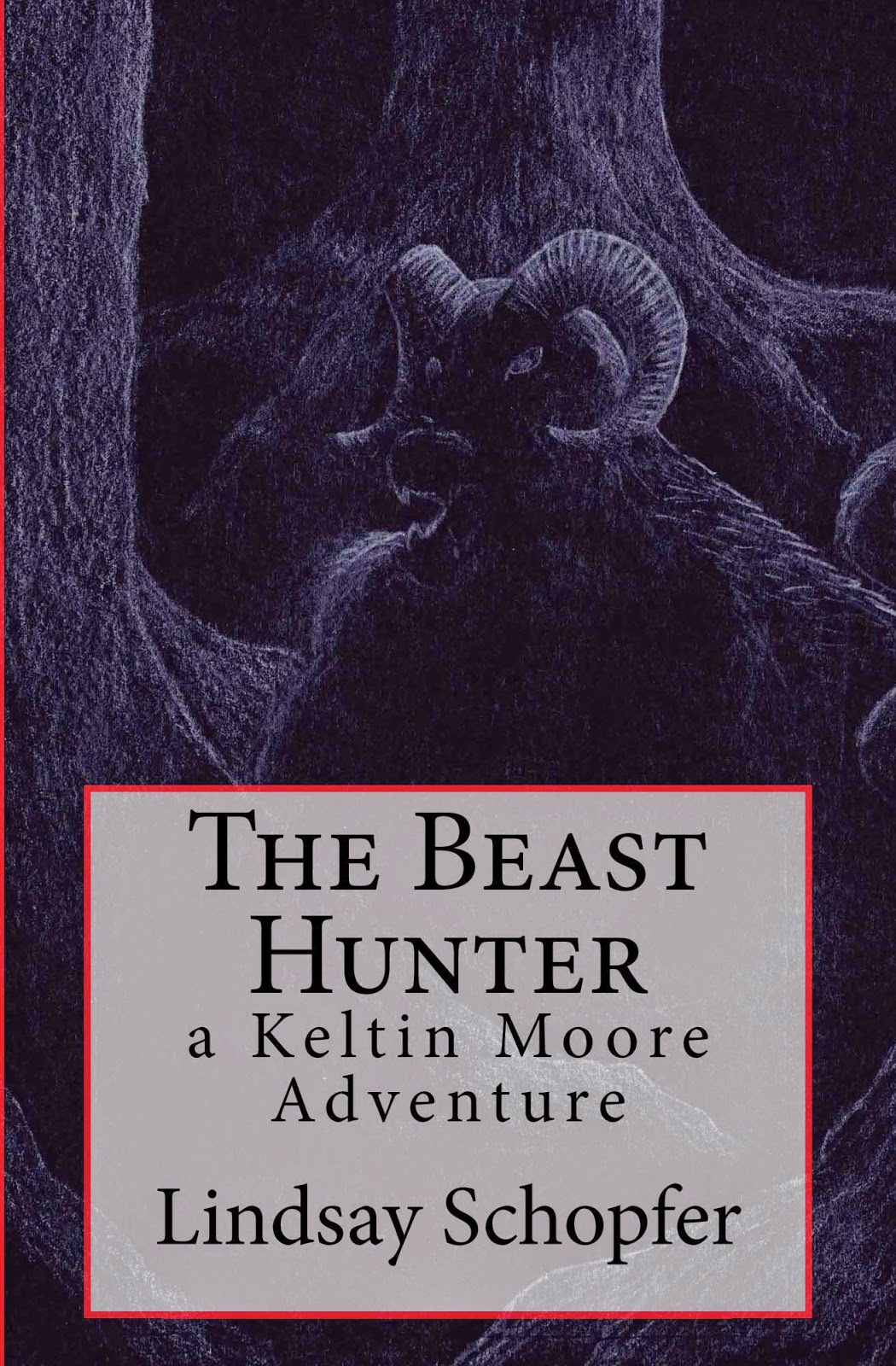
I eventually decided to give these mystical, wandering performers a more specific name after talking with a good friend of mine who spent much of his childhood growing up in France. He told me that the term gypsy has a very negative stigma for many Europeans, and that even though he had nothing against Romanian people, he still had a hard time ignoring the prejudices that he had been raised with as he read my story. I decided that it would be better to avoid the risk of alienating any of my European readers while at the same time taking this as an opportunity to get creative and come up with something more original instead.
I thought it might be more interesting if a wayfarer had to know his family history in order to choose which ancestor to call on in any given situation. The result was a magic system that was both straightforward and complex, with a lot of opportunity for unique subplots and conflicts along the way. The only downside to this approach is that I have to maintain an increasingly complex family tree and family history for Jaylocke as I write the series to avoid giving him one-too-many great-grandmothers, but I think it’s definitely worth it.
Interestingly, when I had my Beta read for The Beast Hunter, one of my readers said that she felt that the hunters’ prejudice was unmotivated. In her eyes, there wasn't anything in the behavior of the Weycliff that justified the level of animosity that they were faced with. While I appreciated her comments, I decided to leave the relationship between the hunters and wayfarers the way it was, as I believe that prejudice is, by definition, an unjustified reaction to someone else just being different.
I hope you've enjoyed this in-depth look at some of the people and cultures from my latest novel. Check out other bonus content by clicking the Bonus Content label in the right-hand sidebar, or go to the Lindsay’s Books tab at the top of this blog if you’d like to purchase either a digital or paperback copy of The Beast Hunter.
Their Name
Originally, Jaylocke and his people didn't have an original name and I simply called them gypsies. However, it was never my intention to suggest that these people should be identified as Romanians, and I did a great deal of research to make sure that I avoided having too many similarities with them. My goal with using the word gypsy was to conjure up a fanciful, nonspecific image for the reader, similar to the way that people think of a corsair as merely an exotic pirate as opposed to a citizen of the Ottoman Empire.I eventually decided to give these mystical, wandering performers a more specific name after talking with a good friend of mine who spent much of his childhood growing up in France. He told me that the term gypsy has a very negative stigma for many Europeans, and that even though he had nothing against Romanian people, he still had a hard time ignoring the prejudices that he had been raised with as he read my story. I decided that it would be better to avoid the risk of alienating any of my European readers while at the same time taking this as an opportunity to get creative and come up with something more original instead.
Their Ancestors
The close relationship between the Weycliff people and their ancestors was actually inspired by my own personal experiences in genealogical research. As a Mormon, I believe that families are eternal, and that it is important to not only know what the names of my ancestors are, but what they were like as well. I took that idea and contrasted it with the way helpful ancestors are often portrayed in other fantasy novels as being little more than a nameless group of spirits with no real personalities of their own.I thought it might be more interesting if a wayfarer had to know his family history in order to choose which ancestor to call on in any given situation. The result was a magic system that was both straightforward and complex, with a lot of opportunity for unique subplots and conflicts along the way. The only downside to this approach is that I have to maintain an increasingly complex family tree and family history for Jaylocke as I write the series to avoid giving him one-too-many great-grandmothers, but I think it’s definitely worth it.
Their Place in the World of The Beast Hunter
While I did avoid using the term gypsy to avoid possible reader prejudice, it was always my intention that the Weycliff wayfarers would be the victim of bigotry and stereotyping. Along with the Loopi, the wayfarers have to deal with hostility and distrust from their fellow hunters to such a degree that it eventually becomes one of the key dynamics in the novel’s second act.Interestingly, when I had my Beta read for The Beast Hunter, one of my readers said that she felt that the hunters’ prejudice was unmotivated. In her eyes, there wasn't anything in the behavior of the Weycliff that justified the level of animosity that they were faced with. While I appreciated her comments, I decided to leave the relationship between the hunters and wayfarers the way it was, as I believe that prejudice is, by definition, an unjustified reaction to someone else just being different.
I hope you've enjoyed this in-depth look at some of the people and cultures from my latest novel. Check out other bonus content by clicking the Bonus Content label in the right-hand sidebar, or go to the Lindsay’s Books tab at the top of this blog if you’d like to purchase either a digital or paperback copy of The Beast Hunter.
Monday, January 5, 2015
Game Story Review – Final Fantasy X
 When I did my first review of the storyline from a popular video game, I decided to play it safe and do a favorite game that had a fairly straightforward plot. This time, however, I thought I’d try reviewing a game that -while still being one that I really enjoy- has a much more complex plot and may even contain a few flaws. Be warned that because of this story’s complexity, there will be a number of spoilers in this review, though I promise that I won’t give away the game’s final ending. With all that said, let’s talk about Final Fantasy X, the classic Japanese role-playing game by Square Enix.
Premise
The game’s main character is a sports star named Tidus whose technologically advanced world of Zanarkand is destroyed by Sin, a towering, indestructible leviathan. After the attack, he awakens in a world 1,000 years in the future that is culturally, religiously, and industrially dominated by the movements and occasional attacks by Sin. Tidus soon meets up with Yuna, a young summoner who uses fighting monsters called aeons to combat fiends and who is on a pilgrimage to defeat Sin. Tidus joins her as well as her guardians, Wakka, Lulu, and Kimahri. Later, the group is also joined by Auron, a warrior monk who helped the fathers of Yuna and Tidus defeat Sin ten years ago, and Rikku, Yuna’s cousin and a member of the Al Bhed, a subculture of humans who don’t agree with the way their world has come to accept Sin.The rest of the story revolves around Yuna’s pilgrimage as well as learning the truth about what Sin is and how the rest of the world works. In the end, they learn that in order for a summoner to defeat Sin, she must first sacrifice the life of one of her companions whose soul then becomes the Final Aeon, which is then able to kill Sin. Unfortunately, the Final Aeon then turns on the summoner and kills her, ultimately leading it to becoming the next Sin and starting the cycle all over again. Upon learning this, Yuna and Tidus reject this endless cycle and together vow to find some way to defeat Sin forever.
Review
Trust me when I say that this game’s plot and storyline is much more complex than the very brief description that I’ve given here. Even after playing the game all the way through more than once, I still had to go back to Wikipedia to reread the plot to make sure I got it all right, and that’s without even mentioning the game’s many subplots, including a megalomaniac prophet trying to marry Yuna and Tidus’ struggle to escape from his heroic father’s shadow. Of course, just because a story is complex doesn’t mean it’s good. So what do I think of the game’s plot? The central theme of Final Fantasy X seems to be life after death and what eventually happens to the souls of the deceased. Each monster or fiend that the characters fight is said to be an ‘unsent’, a person who died without the proper rites performed to allow their soul to go to the world’s afterlife or Farplane. However, some unsent souls don’t become fiends and can instead continue inhabiting their bodies to attain a sort of immortality. Still other dead souls become fayth, communal ghosts which give power to a summoner’s aeons, which are themselves also the souls of those who have died. The game never really explains this confusing and sometimes contradictory magic system, relying on emotional motivations rather than logical reasoning to explain which dead people become monsters, semi-immortal, fayth, or aeons.
 In fact, a lot of the plot’s more bizarre twists and turns seem to exist because of their potential emotional impact, rather than any sort of logical reasoning. For example, there’s a scene where Yuna agrees to marry Seymour, the psychotic prophet character, despite the fact that she knows that not only did he murder his own father, but that he’s actually dead himself, since the party killed Seymour in an earlier encounter. The rest of the cast explain that by agreeing to marry him, Yuna is trying to get close enough to Seymour to send him to the Farplane, but what we eventually get is a dramatic wedding scene where Tidus and the others try to crash the wedding, fail, get captured, and are used as leverage to make Yuna marry Seymour. Yuna agrees, after which Seymour reveals that he’s going to kill Tidus and the others anyway. Upon learning that, Yuna then jumps off a cliff, only to be saved by an Aeon at the last minute as her friends escape.
So why, throughout all of that, didn’t she send Seymour? She has multiple opportunities throughout this protracted scene, but she never even tries. It’s moments like these, an unwanted marriage, the sacrifice of marrying against your will to save a friend, betrayal, attempted suicide... it’s all of these very emotionally charged screenshots that seem to drive the plot, rather than well-developed character motivation resulting in events which then trigger other events due to the characters’ reactions.
The wedding scene isn’t the only time this happens. It’s a trend that continues throughout the whole game, making it feel more like an interactive, role-playing music video than a developing story arc. But does that make it a terrible game? Not necessarily. As I said, this is a game that I’ve played multiple times, each time enjoying the beautifully realized world and engaging gameplay. Heck, I’ve sunk dozens of hours into the blitzball mini-game alone over the years. There is plenty of quality gameplay and fascinating visuals to keep rpg fans very happy for a long, long time. And as for the emotionally driven plot, many mediums rely more heavily on the human condition than a chain of events for their storylines, operas and musicals being the first examples that come to mind.
In the end, I would recommend Final Fantasy X to rpg fans who love an immersive world with solid gaming mechanics and some evocative storytelling. While it may seem overwrought at times, as long as you know what kind of gaming experience you signed up for when you started you should be able to relax and enjoy the ride all the way to the game’s poignant, powerful ending.
Thanks for reading this game story review. Leave a comment below to let me know if you enjoyed this review and if you’d like to see more game-related content in the future.
Monday, December 1, 2014
Let Your Voice Be Heard
Those of you who have been following the Keltin Moore Online Serial may be wondering when I’m
 planning on posting the next episode. The honest truth is that the episode isn’t ready, but there’s more going on than just a missed deadline. I’m actually considering discontinuing the serial entirely as I evaluate which projects would be the best use of my limited time and energy in 2015.
To give you some background, I first started the Keltin Moore Online Serial roughly three years ago as an alternative to having an author blog. The goal of the serial was to establish a fan base that would generate buzz for me as an author and ultimately translate into more book sales. While this did happen to some extent, the truth is that the serial has become more of a burden than a benefit to me since the publication of The Beast Hunter. Also to my surprise, the overwhelming response from those that bought the book is that they would rather wait for the sequel than read a monthly, online serial. Combine that with the loss of readers from the serial’s first season to the second, and it seems I have been sent a clear message that my fans want more books, not episodes.
It’s not just the serial that I’m reconsidering either. I've experimented with a variety of article topics for this blog, including bonus content from my stories, the craft of writing, and even some personal musings and a video game review! While these weekly updates have been much easier to maintain than monthly serial episodes, I've received little feedback on any of these features. I know people are visiting the blog from all around the world, but so far they've been a fairly silent bunch. I've also had some issues finding an audience for my posts on Twitter, Facebook, and other social media platforms. A few weeks ago I even conducted a short survey asking followers to vote on what sort of posts they most wanted to see, but after changing my content based on the survey results, I actually got less response than I was getting before!
The truth is, I don’t put content online for my own gratification. As an author juggling four books as well as a growing number of speaking engagements and writing coaching clients, I have more than enough to keep me busy and plenty of opportunities to express myself. My goal with all of my online activities has always been to engage with fans and spread the word about my books, workshops, and services as a writing coach. I have no desire to take time away from more productive activities to continue posting content that my fans aren't interested in enough to endorse to their friends.
With all this in mind, I've decided to give you, my readers and fans, the opportunity to let your voice be heard. I want to know not only what sort of online content you would want to see, but what sort of content you would be willing to like, share, and discuss in your own social media. Leave a comment below or on one of my author profiles at either Twitter or Facebook to let me know what you've enjoyed so far and what you want to see from me in the future. I’d love to hear your thoughts on any of these subjects:
The Keltin Moore Online Serial vs. more books
Which blog article subjects you've enjoyed the most or would like to see in the future
What sort of social media posts you would be most likely to like, share, or comment on
I’m dedicating all of December to this effort as I plan to divide my time between my family and my writing, as well as monitoring and responding to your comments. Thank you in advance for helping me to improve myself as an author as well as setting a few New Year’s resolutions for 2015.
To give you some background, I first started the Keltin Moore Online Serial roughly three years ago as an alternative to having an author blog. The goal of the serial was to establish a fan base that would generate buzz for me as an author and ultimately translate into more book sales. While this did happen to some extent, the truth is that the serial has become more of a burden than a benefit to me since the publication of The Beast Hunter. Also to my surprise, the overwhelming response from those that bought the book is that they would rather wait for the sequel than read a monthly, online serial. Combine that with the loss of readers from the serial’s first season to the second, and it seems I have been sent a clear message that my fans want more books, not episodes.
It’s not just the serial that I’m reconsidering either. I've experimented with a variety of article topics for this blog, including bonus content from my stories, the craft of writing, and even some personal musings and a video game review! While these weekly updates have been much easier to maintain than monthly serial episodes, I've received little feedback on any of these features. I know people are visiting the blog from all around the world, but so far they've been a fairly silent bunch. I've also had some issues finding an audience for my posts on Twitter, Facebook, and other social media platforms. A few weeks ago I even conducted a short survey asking followers to vote on what sort of posts they most wanted to see, but after changing my content based on the survey results, I actually got less response than I was getting before!
The truth is, I don’t put content online for my own gratification. As an author juggling four books as well as a growing number of speaking engagements and writing coaching clients, I have more than enough to keep me busy and plenty of opportunities to express myself. My goal with all of my online activities has always been to engage with fans and spread the word about my books, workshops, and services as a writing coach. I have no desire to take time away from more productive activities to continue posting content that my fans aren't interested in enough to endorse to their friends.
With all this in mind, I've decided to give you, my readers and fans, the opportunity to let your voice be heard. I want to know not only what sort of online content you would want to see, but what sort of content you would be willing to like, share, and discuss in your own social media. Leave a comment below or on one of my author profiles at either Twitter or Facebook to let me know what you've enjoyed so far and what you want to see from me in the future. I’d love to hear your thoughts on any of these subjects:
The Keltin Moore Online Serial vs. more books
Which blog article subjects you've enjoyed the most or would like to see in the future
What sort of social media posts you would be most likely to like, share, or comment on
I’m dedicating all of December to this effort as I plan to divide my time between my family and my writing, as well as monitoring and responding to your comments. Thank you in advance for helping me to improve myself as an author as well as setting a few New Year’s resolutions for 2015.
Subscribe to:
Posts (Atom)